By Any Other Name
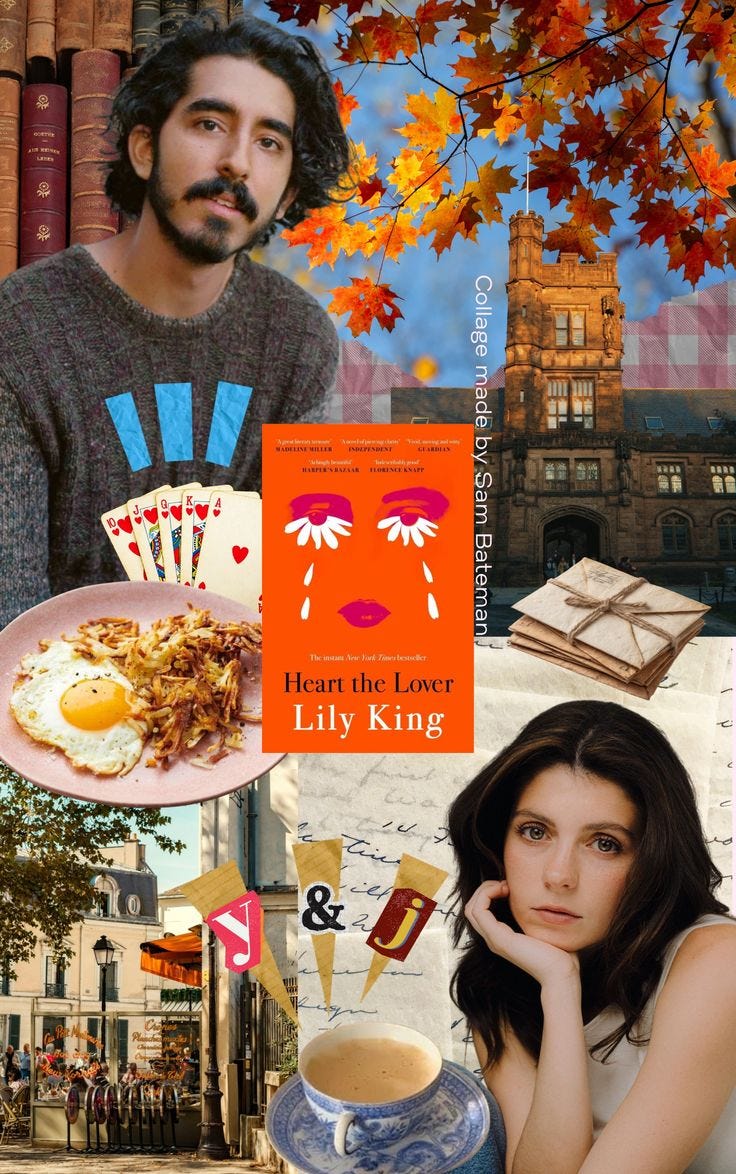
Lily King's Writers & Lovers and Heart the Lover
Sometimes I name things. Other peoples babies, mostly. Fictional characters for others. In a past life — collections, styles, colour ways and so forth. I think about the weight a name carries before it’s found its home. The sounds, the associations, the story it tells.
So when an author uses naming as a structural device, I notice. And Lily King does it twice.
Writers & Lovers
Casey is rarely called Casey in Writers and Lovers. She moves through the novel in the third person, referred to mostly as she, which at first reads as stylistic choice, a close interiority, nothing more. But then you learn her name isn’t technically Casey. It’s Camilla. She never goes by Camilla and it’s jarring for her to hear it. Particularly used by someone new within her professional space, which always felt like an unattainable world to break into yet also the only space she ever wanted to exist in.
Casey comes from her father’s favourite poem, Casey at the Bat, in which Casey is a boy who strikes out when it matters most. She is a girl named for that failure in a poem loved by a man who, we come to understand slowly and then all at once, is not who she needed him to be. King reveals his failures quietly, in that restrained way she does. Harrowing things delivered in a handful of sentences, the absence of language doing the heavy lifting.
And yet she kept it. Casey. She didn’t shed it when he revealed himself, didn’t distance herself from the name even though she distanced herself from him. Maybe because the name predates her disillusionment. Maybe because Casey, the one who strikes out, the one who fails when it counts, turned out to fit her own story better than Camila could. She is a writer who hasn’t finished her novel. She is a woman reeling through grief and debt and bad decisions. She is, for much of this book, someone who keeps swinging and missing.
And then there’s Peabody. Her surname, which floats through the book with an almost comic lightness. Quaint, slightly old-fashioned, belonging to no one in particular. A name that fits a person still in the process of becoming. Not quite landed. Not quite real. A tiny little pea body.
What King is doing, I think, is mapping Casey’s selfhood through her naming. She is Camilla who became Casey, layers of identity that don’t quite cohere, held together by grief and debt and the relentless forward motion of just getting through the day. She isn’t named by anyone who fully sees her. She names herself, partially, imperfectly, from the scraps of other people’s love, which comes into blinding colour in the prequel.
Heart the Lover
In Heart the Lover, King does something even more devastating with the same device.
We know, coming in, that our protagonist is Casey. But she isn’t called Casey. Not until the final page.
THE TWINS - FROM SIR HINCOMB FUNNIBUSTER
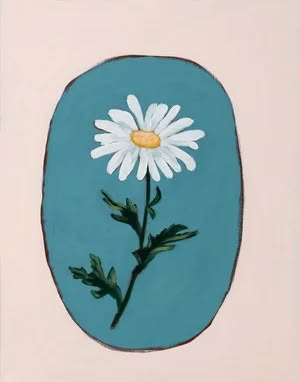
She is Jordan in her twenties, named for a golf scholarship, which is itself a nod to Jordan Baker in The Great Gatsby, a novel entirely about people who construct new names and new identities because they believe who they actually are is inadequate. She is Daisy for a blink because Yash and Sam have a habit of calling their dates “the daisies,” as Gatsby’s crowd might, reducing women to a type before they’ve had a chance to be a person. The idealised projection. The woman loved as a symbol rather than seen as a self. She goes from Daisy to Jordan with the same two men, jumping between the characters in one of the greatest novels where identity is fundamentally hollow.
But then that name, Daisy becomes something more important, a true idealised symbol of love but not in a way that deflates but rather as a mechanism for hope and survival. Gives it to something that holds them both but doesn’t exist in their world, not really. Whether that’s an act of grief or irony or something more complicated than either. Hopefully that’s convoluted enough to not spoil anything, in case you are yet to read. But back to her names. Casey is also tenderly called Hink (which broke my heart) and I guess we can throw in babe for good measure.
THE BABY - FROM SIR HINCOMB FUNNIBUSTER
Each name is a fragment. Someone else’s version of her, filtered through what they need her to be, how they first encountered her, what reduces her to something manageable. Particularly when she doesn’t know how to quite manage who she is even though she constantly tries to. Just wait for Willie from sixth grade, our girl has always tried to compress down. And given how removed she feels in Writers & Lovers, it is again striking to see her succeed which is the greater failure because she’s diluted herself for others and lost sense, which leads to us feeling disconnected from her.
And here’s the thing about Jordan and Daisy and all the others. I don’t think they names are cruel by design. I think when you’re twenties you are so consumed by your own becoming. So absorbed in the project of figuring out who you are, that seeing the entirety of another person feels genuinely beyond your capacity. You love people but you love the version of them that fits inside your story. Often the story where you are the lead, you are the hero, you are the master of destiny and everyone rises and sets to you. It’s unnervingly natural for your twenties, we just hate to admit it. You can’t help it. You don’t have the room to consider gravity outside yourself.
SPADE THE GARDENER’S WIFE - FROM SIR HINCOMB FUNNIBUSTER
So Casey moves through her own life accumulating other people’s names like a debt she never agreed to take on. Loved, yes. But as a fragment. As a figment. Loved as whoever they needed her to be in that particular chapter of their own becoming.
Until the end. Until her husband calls her Casey.
One word. Her word. The name that survived her father’s failures, survived Jordan and Daisy and Hink and babe, survived her own murky messy reeling years of not quite knowing herself. Spoken by the one person who has seen all of her. Not a version. Not a fragment. Her entire being.
It is such a quiet moment to carry so much weight. But that’s what a name does, when it’s said by the right person. It isn’t just a word. It’s recognition. I know who you are. I am calling you by it.
SIR HINCOMB FUNNIBUSTER HIMSELF
Names are doing this all the time, in books and in life. We just don’t always have the language for what we’re noticing. I think about this a lot in my work. The parents who come to me having already named their first child something that doesn’t quite fit. Who describe, usually without realising it, how they were swayed by a partner or a mother-in-law or a trend, and ended up with a name that belongs to someone else’s idea of their child. The relief when they find the right one. The way they say yes before I’ve even finished suggesting it.
To be called by your real name, the one that holds all of you, is not a small thing.
Lily King wrote two books to say that. I think she was right.